3-Month-Old Baby Development - Height, Reflexes, and Sleep Pattern

This article is approved by Çiğdem İrem İleri
Published: 11 March, 2026
Updated: 30 July, 2026

At a Glance
In the 3-month-old baby development stage, the total sleep requirement generally ranges between 14-17 hours within a 24-hour period.
Daytime wake windows average 60-120 minutes, but the most important thing is to follow your baby's tiredness cues.
Feeding intervals can average 3-4 hours; meal amounts vary depending on the baby's appetite.
3-month-old baby development is an exciting transition period where your baby adapts more to the outside world, conscious smiles begin, and motor skills accelerate. As the rush of the first months slowly gives way to predictable routines, many parents are curious about sleep, feeding, and growth tracking. In this guide, we will cover all the details for the third month for parents of children aged 0-6 years, from wake windows to height-weight expectations, keeping in mind that every baby grows at their own pace.

3-Month-Old Baby Height, Weight, and Physical Growth Standards
The height and weight standards for three-month-old babies can average around 5.8 kg (12.8 lb) and 60 cm (23.6 in) for girls, and 6.4 kg (14.1 lb) and 61.4 cm (24.2 in) for boys. According to the World Health Organization (WHO), these numbers are only averages, and there is a very wide growth range considered healthy depending on genetic factors. Your baby's steady progress on their own growth curve compared to last month is much more valuable than the numbers themselves. As their neck muscles get stronger, you may notice that they can hold their head more upright when being held.

Basic Baby Reflexes and Motor Skills
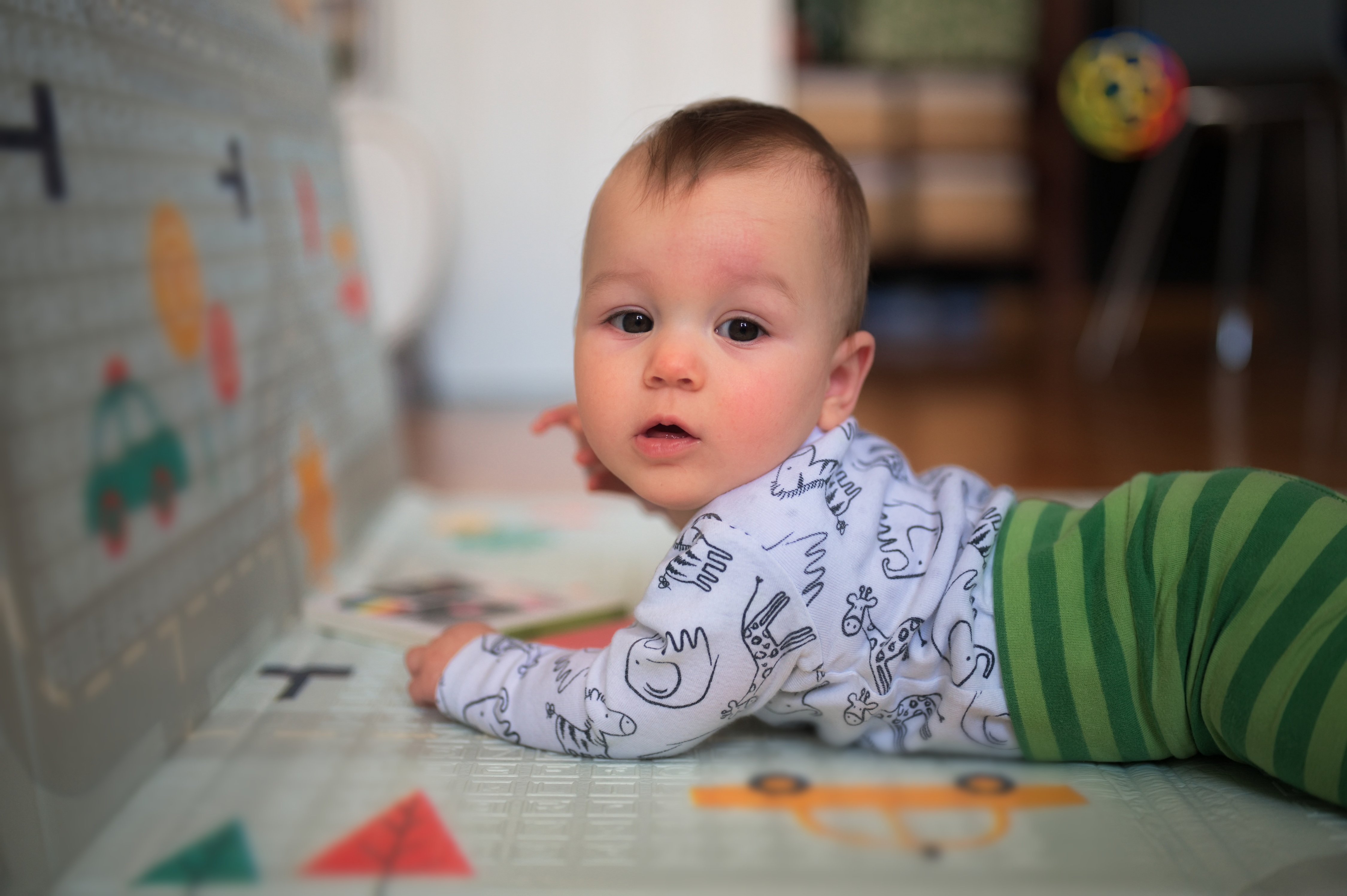
Involuntary reflexes like the startle (Moro) and grasp reflex generally begin to fade by the third month, giving way to more conscious hand and arm movements. Your baby can open and close their hands, examine their fingers, and reach for dangling objects. The American Academy of Pediatrics (AAP) recommends regular tummy time activities during awake hours, done in short sessions every day, to support shoulder and neck muscles.
How to Read a Growth Chart Percentile
A growth percentile chart shows what percentile your baby's height and weight are in compared to other babies, as well as their own growth momentum. For example, a baby who has been tracking at the 25th percentile since birth and maintains their curve is showing a sign of healthy growth. Focusing on your baby's historical data rather than comparing numbers with other babies reduces anxiety; to make this tracking easier, you can safely log your data using the percentile calculator tool in the Yuppo app.
3-Month-Old Baby Feeding Schedule: How Much Should They Eat Daily?
A three-month-old baby usually feeds 6 to 8 times a day and, if taking formula, can consume an average of 120-150 ml (4-5 fl oz) per feeding. For breastfed babies, this amount is evaluated by nursing duration and frequency. Due to babies' gradually developing digestive systems, it may be possible for them to take slightly more nutrients at once. This helps feeding intervals to lengthen slightly.
Monthly Baby Feeding Chart and Number of Feedings
As babies' feeding capacity gradually increases, feeding intervals can extend up to an average of 3 to 4 hours, though this varies from baby to baby. With an increasing interest in surrounding sounds, interrupting a feed is common during this period.
Feeding Method | Average Interval | Approximate Amount / Duration | Daily Feedings |
|---|---|---|---|
Breast Milk | Every 3 - 4 hours | 15 - 20 min (varies by baby's pace) | 6 - 8 times |
Formula | Every 3 - 4 hours | 120 - 150 ml (4 - 5 fl oz) | 6 - 8 times |
*The amounts provided are averages; your baby's appetite may temporarily change during growth spurts.
What Are the Signs of Fullness in Babies?
Dropping the breast or bottle, turning the head, and relaxing the hands are the most common signs of fullness in babies. Closing their lips or getting distracted during a feed can indicate they have had enough. Crying is a late sign of hunger; watching for early cues like lip smacking or rooting makes the process smoother.
3-Month-Old Baby Sleep Schedule and Wake Windows
A three-month-old baby's sleep schedule generally consists of a total sleep need ranging from 14 to 17 hours in a 24-hour period. While 3-4 short naps occur during the day, nighttime sleep gradually begins to lengthen. When reviewing month-by-month baby sleep schedules, it is seen that 4-6 hour uninterrupted sleep blocks can occur at night this month, but frequent waking is also completely normal.

Creating a Daytime Sleep and Nighttime Routine
A nighttime routine established with steps like a bath, massage, and feeding in dim light helps ease the baby's transition to sleep. Repeating these rituals at the same times signals sleep to the biological clock. During the day, slightly darkening the room and lowering background noise supports more effective naps.
Ideal Wake Windows Chart
Although the ideal wake window for three-month-old babies generally ranges between 60 and 120 minutes, the main deciding factor is the baby's tiredness cues. Exceeding this time significantly can cause the baby to become overtired and resist sleep.
Wake Window Period | Average Duration (Wake Window) | Tiredness Cues to Watch For |
|---|---|---|
Morning (First Wake) | 60 - 90 minutes | Eye rubbing, yawning, calming down |
Afternoon | 90 - 120 minutes | Glazed look, fussing |
Evening (Before Sleep) | 90 - 120 minutes | Restlessness, unresponsiveness to external stimuli |
*Instead of the strict 60-120 minute ranges listed, focus on your baby's tiredness cues, such as yawning or eye rubbing.
Coping with the Witching Hour and 3-Month Sleep Regression in Babies
Witching hour fussiness that starts in the late afternoon and a sleep regression marked by sudden frequent waking are temporary developmental phases parents may face in the third month. As the nervous system matures and the baby tries to process external stimuli, end-of-day fatigue can turn into intense meltdowns.
What is the Witching Hour and How to Soothe It?
Witching hour meltdowns, which usually start in the afternoon and can be caused by overstimulation, can be alleviated with skin-to-skin contact and a dimly lit environment. These intense crying spells, similar to colic pain in babies, are also related to digestive system adaptation. Gentle rocking or a warm bath may soothe the baby.
Sleep Regression Symptoms and Solutions
A baby who previously slept well suddenly starting to wake up frequently is a sign of a sleep regression, and it is important to stick to the existing sleep routine during this process. Although known as the 4-month sleep regression, the signs can begin towards the end of the third month. During this temporary period, compassionately give your baby the opportunity to try falling asleep independently without panicking.
Summary and Next Steps
Sleep routine: Track wake windows according to your baby's cues. Try moving to the sleep environment immediately at the first yawn this week.
Physical activity: To support neck muscles, do short tummy time practices when your baby is awake and in a good mood.
Feeding tracking: Feeding intervals may lengthen slightly; instead of forcing, focus on observing signs of fullness, such as turning their head away.
Soothing: Use skin-to-skin contact during evening fussiness and remind yourself that this is a temporary developmental phase.
When to Consult a Professional for 3-Month-Old Baby Development
When monitoring 3-month-old baby development, a pediatrician should be consulted if neurological delay signs are noticed, such as not responding to sounds or not making eye contact. Although babies have their own pace, the following situations require medical evaluation:
An underarm temperature of 38°C (100.4°F) or higher in babies younger than 3 months or at 3 months (overall body temperature can vary, but this threshold requires a doctor's check).
Showing absolutely no response, not even a startle reflex, to sudden noises.
Refusing to feed for several consecutive meals and having fewer than 4 wet diapers a day.
Not tracking moving objects with their eyes or having complete floppiness in their muscles.
This content is for informational purposes only; always consult your pediatrician for diagnosis and treatment.
Regularly tracking your baby's growth data and sleep schedules during this rapid period of change can help ease your parenting anxieties. With the Yuppo app, you can monitor your baby's personal percentile curve, log developmental milestones, and safely access month-specific activity recommendations. You can also gain detailed information about the next steps of your baby’s development checking out our 4-month-old baby development article.
Frequently Asked Questions
How many hours does a 3-month-old baby sleep at night?
A three-month-old baby's nighttime sleep generally spans a broad range of 8 to 12 hours in total. Although they start sleeping in longer blocks at night, waking up 1-2 times due to hunger or transitioning into light sleep cycles is normal, and each baby's uninterrupted sleep duration varies.
Should I wake a 3-month-old baby for night feedings?
Unless your doctor advises otherwise and your baby's weight gain is healthy, waking a baby for night feedings is generally not recommended. Since stomach capacity is slightly larger this month, babies can sleep uninterrupted for up to 4-6 hours; they will wake up and let you know when they are hungry.
When does the witching hour end for 3-month-olds?
The witching hour phase usually gradually diminishes and ends between the 3rd and 4th months as the nervous system matures. As adaptation to the outside world increases and the baby begins to process environmental stimuli more easily, these excessive fussiness episodes in the evenings resolve on their own.
What games can a 3-month-old baby play?
The most suitable games for three-month-old babies are tummy time practices, rattle tracking, and mirror games. Encouraging them to reach for noisy toys, having affectionate face-to-face conversations, and letting them feel different textures are the best activities to support sensory development.
Why does a 3-month-old baby constantly put their hands in their mouth?
A baby putting their hands in their mouth is a natural part of their developing motor skills and their way of exploring the world this month. This reflex is also one of the ways babies soothe themselves, so it shouldn't be interpreted as a sign of hunger every single time.
Is a sleep regression normal in a 3-month-old baby?
It is quite normal to experience a sleep regression towards the end of the third month, during this neurological development period when sleep cycles begin to change. Frequent waking and resisting sleep are not permanent sleep problems, but rather temporary signs of healthy growth and brain development.
References
World Health Organization. (2006). WHO Child Growth Standards: Length/height-for-age, weight-for-age, weight-for-length, weight-for-height and body mass index-for-age: Methods and development. https://www.who.int/toolkits/child-growth-standards/standards/weight-for-age

Dr. Çiğdem İrem İleri
Developmental Psychologist
After graduating from Koç University in 2019 with a double major in Psychology and Media and Visual Arts, alongside track programs in Design, Gender Studies, and Media and Management, Çiğdem İrem İleri began her integrated doctoral studies in Developmental Psychology at the same institution that same year.